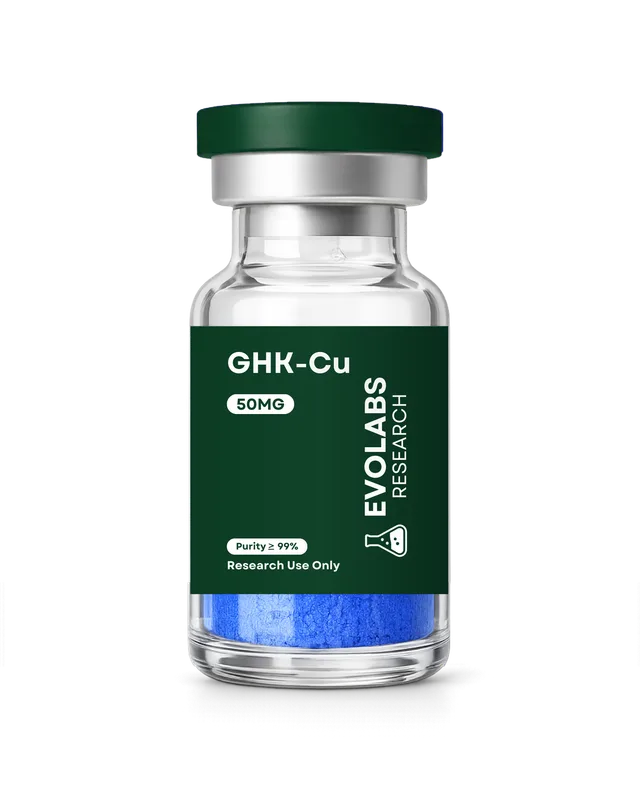
GHK-CU
Copper peptide complex studied for skin regeneration, wound healing, and anti-aging effects. GHK-Cu stimulates collagen synthesis and has antioxidant properties.
Currently Out of Stock
Enter your email and we'll notify you the moment GHK-CU is back in stock.
Compound Profile
Pharmaceutical Data Sheet
Mechanism of Action
How GHK-CU Works
GHK-Cu (glycyl-L-histidyl-L-lysine:copper 2+) is an endogenous human tripeptide with high copper-binding affinity. It stimulates collagen, elastin, and glycosaminoglycan synthesis in fibroblasts, promotes wound healing across skin and mucosa, and exerts broad epigenetic effects β regulating over 4,000 human genes according to whole-genome expression studies. GHK-Cu is also a potent activator of superoxide dismutase and other antioxidant enzymes.
- Upregulates procollagen I and III gene expression
- Inhibits MMP-1, MMP-2, MMP-9 collagenase activity
- Stimulates decorin and glycosaminoglycan synthesis
- Promotes organized collagen fiber deposition
- Upregulates VEGF and FGF-2 expression
- Promotes neovascularization at wound sites
- Enhances oxygen and nutrient delivery to healing tissue
- Supports granulation tissue formation
- Upregulates superoxide dismutase (SOD) expression
- Activates catalase and glutathione peroxidase
- Neutralizes ROS in damaged tissue
- Copper cofactor enhances intrinsic antioxidant activity
GHK-Cu binds to integrin receptors on fibroblasts and activates TGF-Ξ²1 signaling, directly upregulating procollagen type I and III synthesis. It simultaneously inhibits matrix metalloproteinases (MMP-1, -2, -9) that degrade the extracellular matrix, creating a favorable balance toward tissue building. This dual mechanism (synthesis up, degradation down) accelerates wound closure and skin remodeling.
Pickart L et al., J Biochem (2015): GHK-Cu and human gene expression β comprehensive review.
Preclinical Findings
Research Models
Clinical Data
Topical GHK-Cu Improves Skin Laxity and Collagen Density
Double-blind human studies of topical GHK-Cu formulations demonstrate significant improvements in skin laxity, thickness, collagen density, and wrinkle depth compared to vehicle-only controls. Effects typically manifest within 4β8 weeks of regular application.
Leyden JJ et al., Cosmet Dermatol (2000): GHK-Cu and skin quality improvement in controlled trials.
Double-blind RCT, n=67, 8-week topical application
Research Outcomes
Key Research Success Metrics
Safety Profile
Research Safety Notes
- Endogenous human peptide β naturally present in plasma, saliva, and urine
- Excellent safety profile across topical and injectable research protocols
- No systemic toxicity or organ damage in preclinical studies
- No immunogenic response expected from endogenous tripeptide
- Topical application: no significant sensitization or adverse skin reactions reported
GHK-Cu is an endogenous peptide with extensive topical cosmetic research. Injectable research data is more limited. For research use only.
About GHK-CU
Copper peptide complex studied for skin regeneration, wound healing, and anti-aging effects. GHK-Cu stimulates collagen synthesis and has antioxidant properties.
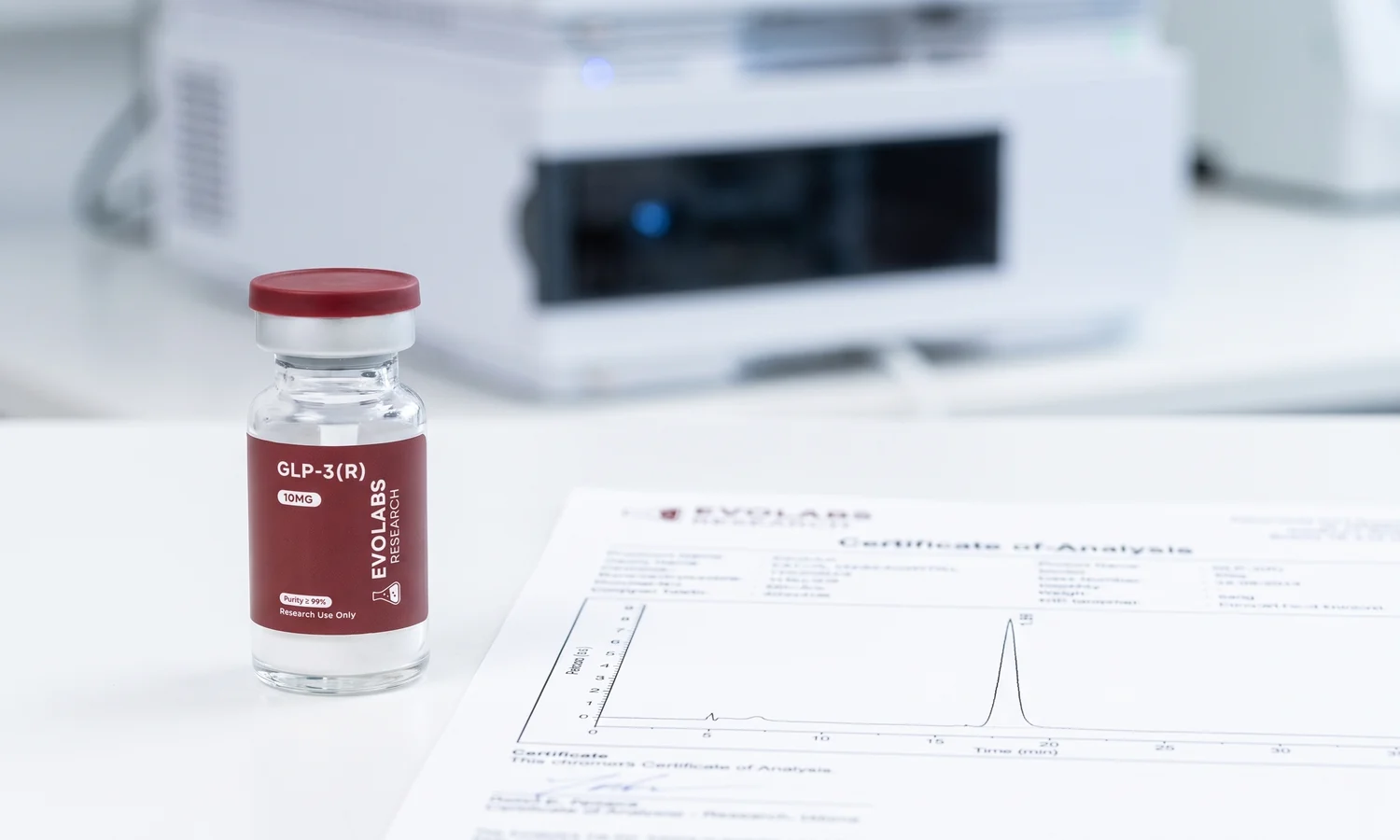
All EVO Labs Research compounds are manufactured to research-grade standards and independently tested by Janoshik Analytical (Prague, est. 2013). The Certificate of Analysis for this compound includes full HPLC chromatography data, mass spectrometry confirmation, net purity percentage, and net content verification.
Research Use Only
This product is strictly for in vitro research and laboratory use only. Not for human or veterinary consumption. By purchasing, you confirm use in a controlled research setting.