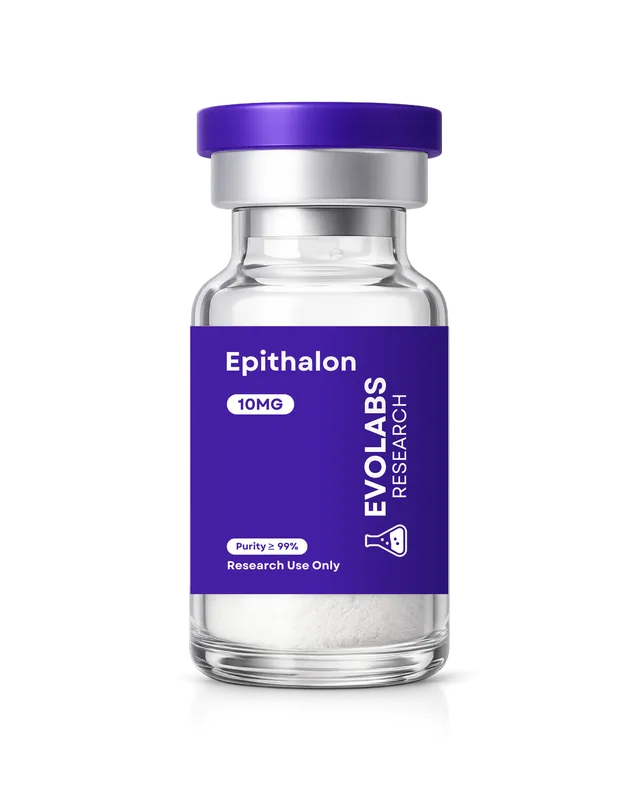
Epithalon
A tetrapeptide studied for its role in telomere regulation and epigenetic effects. Epithalon (Epitalon) has been researched for anti-aging and longevity applications.
Compound Profile
Pharmaceutical Data Sheet
Mechanism of Action
How Epithalon Works
Epithalon (Epitalon) is a synthetic tetrapeptide derived from the pineal gland peptide complex Epithalamin, originally isolated by Professor Vladimir Khavinson. It acts primarily by upregulating telomerase (hTERT) expression in somatic cells, enabling telomere elongation β a mechanism normally restricted to germline and stem cells. It also modulates melatonin secretion and exerts epigenetic effects on age-related gene expression.
- Upregulates hTERT catalytic subunit expression
- Enables telomere elongation in somatic cells
- Extends replicative lifespan in cultured fibroblasts
- Reduces telomeric erosion in aging tissue
- Stimulates pineal melatonin synthesis
- Restores circadian rhythm disruption in aging models
- Melatonin acts as free radical scavenger
- Circadian normalization protects genomic integrity
- Regulates expression of age-related gene clusters
- Influences histone acetylation patterns in senescent cells
- Modulates p16/p21 senescence pathway activity
- Restores youthful gene expression profiles in aging tissue
Epithalon induces expression of the catalytic subunit of telomerase (hTERT) in somatic cells, enabling de novo telomere synthesis. Studies in cultured human fetal fibroblasts demonstrated telomere elongation of 33% and extended replicative lifespan by 10 population doublings beyond normal Hayflick limit. This mechanism is central to its proposed anti-aging biology.
Khavinson VKh et al., Neuro Endocrinol Lett (2003): Epitalon induces telomerase activity in human somatic cells.
Preclinical Findings
Research Models
Clinical Data
Longitudinal Study: Reduced Mortality at 12 Years
In a landmark 12-year longitudinal study in elderly patients aged 60β80, repeated Epithalon treatment courses were associated with a 1.6β1.8Γ reduction in overall mortality compared to control groups, alongside significant improvements in melatonin levels and psychomotor performance.
Anisimov VN et al., Neuro Endocrinol Lett (2003): Epithalamin reduces mortality in elderly patients.
Longitudinal cohort study, n=266, 12-year follow-up
Research Outcomes
Key Research Success Metrics
Safety Profile
Research Safety Notes
- Extremely small molecular size (4 amino acids) β no immunogenic potential
- No serious adverse events in human longitudinal studies spanning 12 years
- Well-tolerated via subcutaneous, intranasal, and injectable routes
- No receptor desensitization or tachyphylaxis reported with repeated courses
- Safety data available from Russian clinical use spanning 30+ years
Most Epithalon clinical data originates from Russian research and may not meet all Western regulatory standards for clinical trial conduct. For research use only.
About Epithalon
A tetrapeptide studied for its role in telomere regulation and epigenetic effects. Epithalon (Epitalon) has been researched for anti-aging and longevity applications.
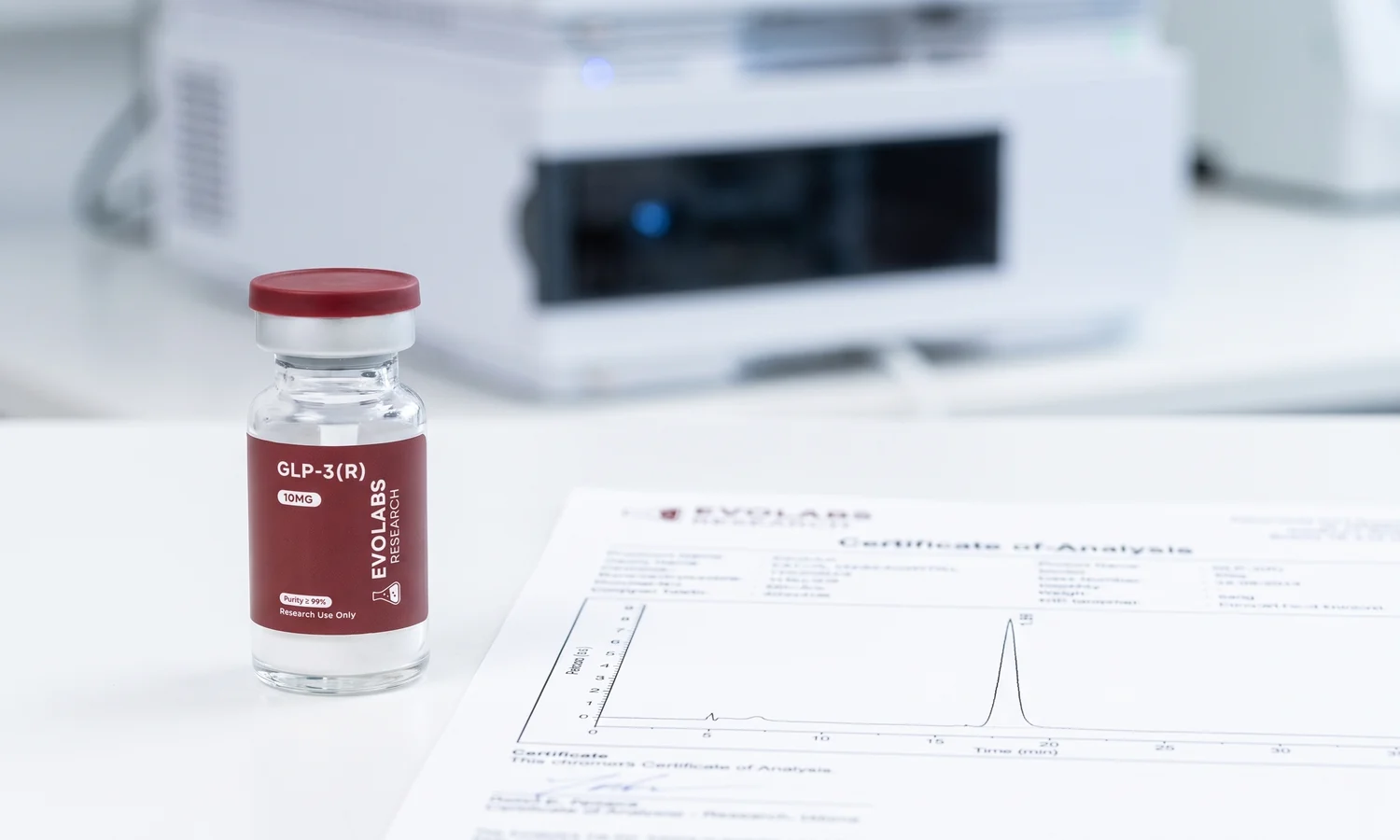
All EVO Labs Research compounds are manufactured to research-grade standards and independently tested by Janoshik Analytical (Prague, est. 2013). The Certificate of Analysis for this compound includes full HPLC chromatography data, mass spectrometry confirmation, net purity percentage, and net content verification.
Research Use Only
This product is strictly for in vitro research and laboratory use only. Not for human or veterinary consumption. By purchasing, you confirm use in a controlled research setting.