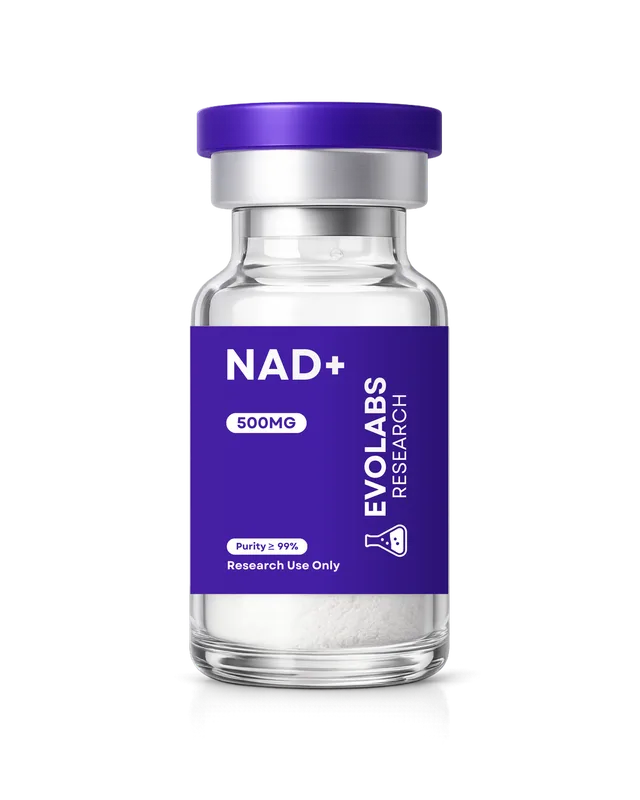
NAD+
Nicotinamide Adenine Dinucleotide — a critical coenzyme found in every living cell. Central to cellular energy metabolism and extensively studied in longevity research.
Compound Profile
Pharmaceutical Data Sheet
Mechanism of Action
How NAD+ Works
NAD+ serves as an essential cofactor for over 500 cellular enzymes, but its longevity effects are primarily mediated through sirtuin deacylases (SIRT1–7). Sirtuins require NAD+ as a co-substrate to catalyze protein deacetylation — regulating gene expression, mitochondrial biogenesis, DNA repair, and inflammation. Age-related NAD+ decline directly impairs sirtuin activity.
- SIRT1/SIRT3 require NAD+ as co-substrate for deacetylation
- Regulate gene expression for stress resistance
- Control mitochondrial protein acetylation and function
- SIRT6 repairs telomeric DNA damage
- PARP1 consumes NAD+ to repair single-strand DNA breaks
- NAD+ depletion limits DNA repair capacity with aging
- NAD+ supplementation restores PARP-mediated repair
- Critical for preventing genomic instability
- CD38/CD157 convert NAD+ to cADPR for calcium mobilization
- Regulates muscle contraction, neurotransmission, and insulin secretion
- CD38 activity increases with aging, accelerating NAD+ depletion
- NAD+ levels modulate cellular calcium dynamics
SIRT1, activated by elevated NAD+, deacetylates PGC-1α, the master regulator of mitochondrial biogenesis. This induces expression of TFAM and mitochondrial respiratory chain components, producing new mitochondria with improved respiratory capacity. SIRT3 concurrently deacetylates and activates key TCA cycle enzymes and Complex I subunits.
Imai S & Guarente L, Trends Cell Biol (2014): NAD+ and sirtuins in aging and disease.
Preclinical Findings
Research Models
Clinical Data
NAD+ Supplementation Restores Muscle Function in Aging
Multiple randomized controlled trials in humans have demonstrated that oral NAD+ precursor supplementation significantly elevates blood NAD+ levels and improves metrics of muscle function, insulin sensitivity, and mitochondrial capacity in older adults.
Yoshino M et al., Science (2021): NMN supplementation and metabolic function in postmenopausal women.
Phase 1/2 RCT, n=25, 10-week supplementation
Research Outcomes
Key Research Success Metrics
Safety Profile
Research Safety Notes
- Excellent safety profile across human studies with NAD+ precursors (NMN, NR)
- No serious adverse events reported in phase 1/2 trials up to 1000mg/day
- Well tolerated across a wide dosing range in elderly populations
- Flushing rare with direct NAD+ vs. niacin-based precursors
- No hepatotoxicity signals in human trials to date
NAD+ precursor research data (NMN/NR) is most relevant for enteral routes. Injectable NAD+ has a separate research profile. For research use only.
About NAD+
Nicotinamide Adenine Dinucleotide — a critical coenzyme found in every living cell. Central to cellular energy metabolism and extensively studied in longevity research.
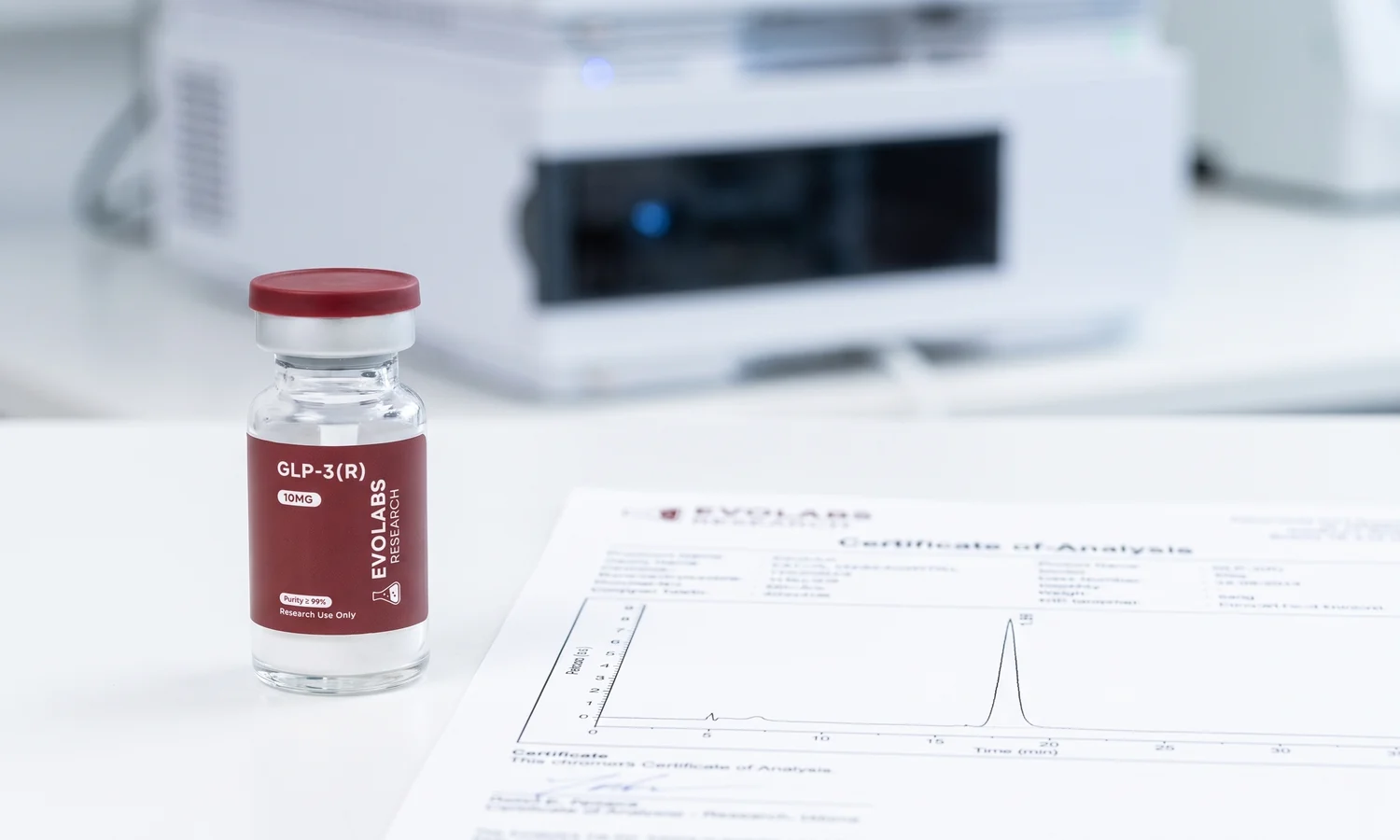
All EVO Labs Research compounds are manufactured to research-grade standards and independently tested by Janoshik Analytical (Prague, est. 2013). The Certificate of Analysis for this compound includes full HPLC chromatography data, mass spectrometry confirmation, net purity percentage, and net content verification.
Research Use Only
This product is strictly for in vitro research and laboratory use only. Not for human or veterinary consumption. By purchasing, you confirm use in a controlled research setting.