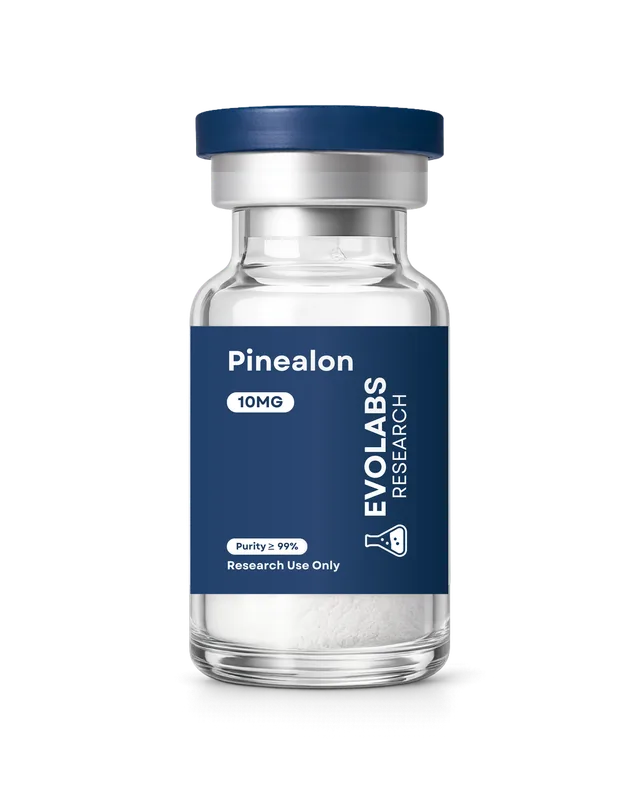
Pinealon
A tripeptide bioregulator from the pineal gland. Pinealon is studied for neuroprotective effects, cognitive function, and circadian rhythm regulation.
Compound Profile
Pharmaceutical Data Sheet
Mechanism of Action
How Pinealon Works
Pinealon (EDR) is an ultrashort tripeptide isolated from the neuroprotective drug Cortexin, originally developed in Russia for military and astronaut use. Due to its small molecular size, it penetrates lipid bilayers and crosses both cellular and nuclear membranes to bind histone proteins and DNA directly. It modulates the MAPK/ERK pathway, caspase-3/p53 apoptotic proteins, SOD2/GPX1 antioxidant enzymes, and 5-tryptophan hydroxylase for serotonin synthesis.
- Modulates MAPK/ERK signaling cascade activity
- Reduces caspase-3 and p53 proapoptotic protein expression
- Interferes with dendritic spine elimination in AD/HD neuronal cultures
- Upregulates SOD2 and GPX1 antioxidant enzymes
- Restricts ROS accumulation at concentrations lower than carnosine
- Prevents H2O2- and homocysteine-induced neuronal apoptosis
- Promotes 5-tryptophan hydroxylase expression via epigenetic changes
- Supports serotonin synthesis and release in brain cortex cultures
- Underlies geroprotective and mood-related neuroprotective potential
Pinealon enters cells and binds histone proteins and ribonucleic acids, changing chromatin accessibility and gene transcription. It modulates MAPK/ERK signaling, reduces caspase-3-mediated apoptosis, upregulates SOD2 and GPX1 antioxidant expression, and modulates PPARA, PPARG transcription factors and calmodulin synthesis.
Khavinson VKh et al., Molecules (2021): EDR peptide mechanism of gene expression regulation in Alzheimer's disease pathogenesis.
Preclinical Findings
Research Models
Clinical Data
Improved Cognition in 72-Patient TBI Trial & Aging Cohort
A trial involving 72 patients with traumatic brain injury demonstrated improved memory and cognitive performance after Pinealon administration. In a separate gerontological study (n=32, ages 41β83), Pinealon slowed the rate of biological aging and improved CNS function in patients with polymorbidity and organic brain syndrome. Macaques given a 10-day Pinealon course showed significant reductions in learning time.
Khavinson VKh et al., Adv Gerontol (2015); Khavinson VKh et al., Bull Exp Biol Med (2011).
Human TBI trial n=72; Aging cohort n=32 (ages 41β83); Primate behavioral study
Research Outcomes
Key Research Success Metrics
Safety Profile
Research Safety Notes
- Ultrashort tripeptide β considered safe at nuclear genetic level (no chromatin condensation changes)
- No reported side effects in published preclinical or clinical studies
- Effective at concentrations much lower than carnosine for neuroprotection
- Broad spectrum of activity with excellent tolerability in Russian clinical use spanning decades
- Not FDA-approved β clinical evidence derives primarily from Russian research institutions
Pinealon research originates primarily from Russian institutions (Khavinson group). Western clinical validation is limited. For research use only.
About Pinealon
A tripeptide bioregulator from the pineal gland. Pinealon is studied for neuroprotective effects, cognitive function, and circadian rhythm regulation.
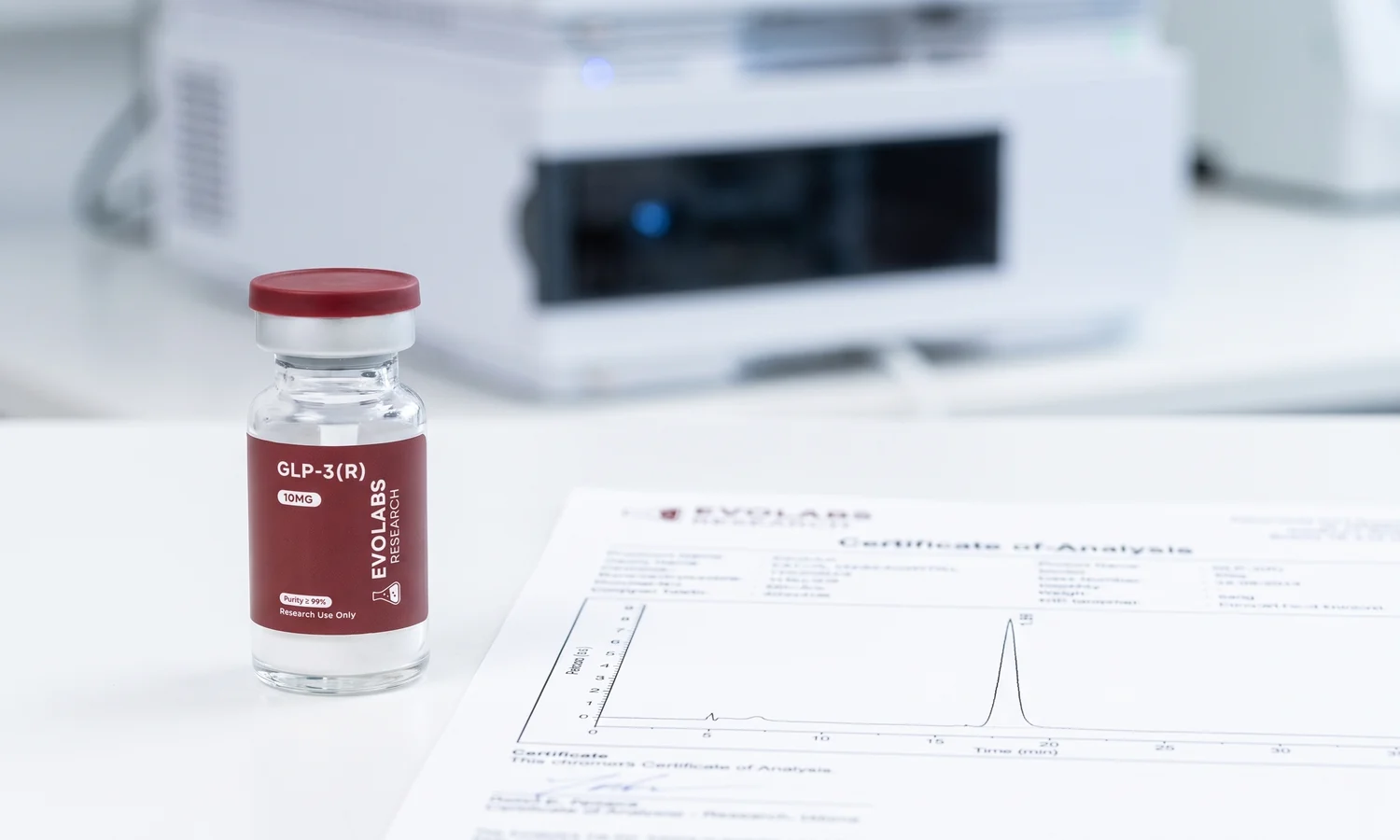
All EVO Labs Research compounds are manufactured to research-grade standards and independently tested by Janoshik Analytical (Prague, est. 2013). The Certificate of Analysis for this compound includes full HPLC chromatography data, mass spectrometry confirmation, net purity percentage, and net content verification.
Research Use Only
This product is strictly for in vitro research and laboratory use only. Not for human or veterinary consumption. By purchasing, you confirm use in a controlled research setting.