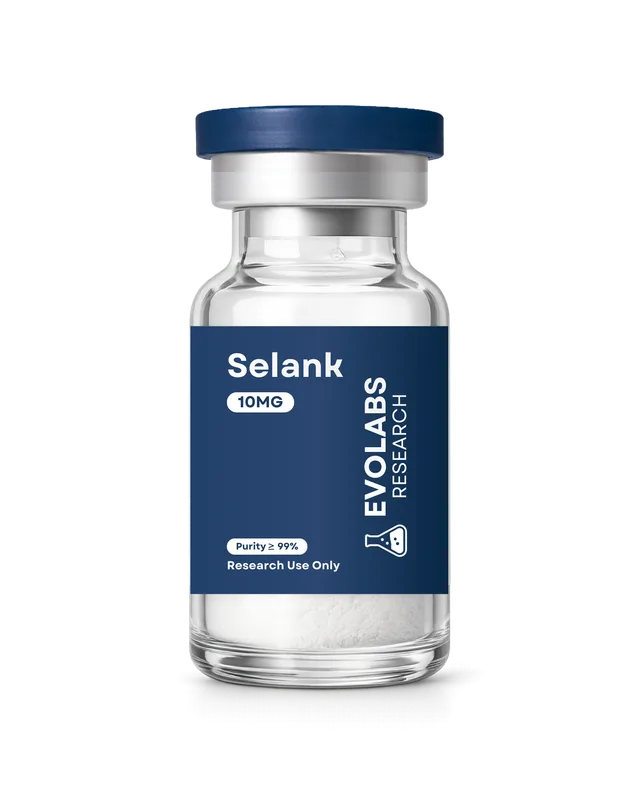
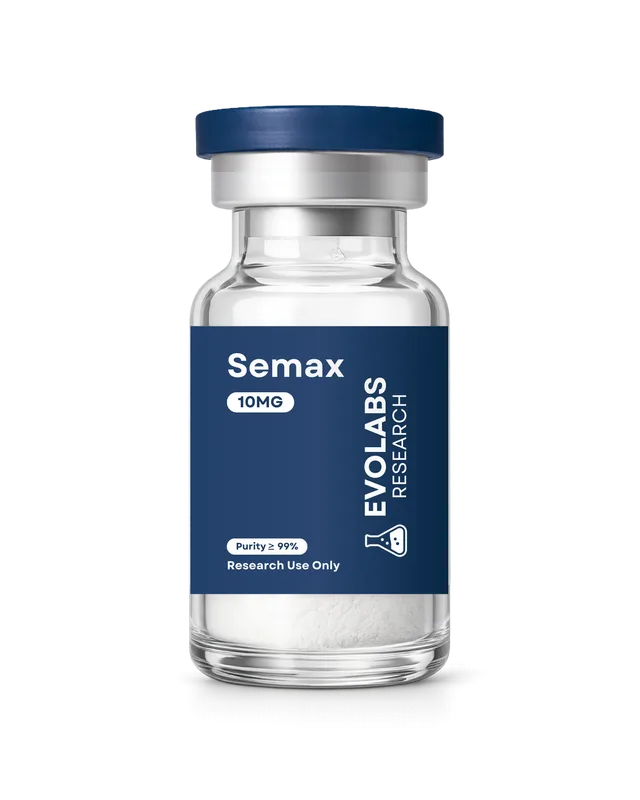
Semax
A synthetic analog of ACTH derived from the N-terminus of ACTH. Semax has been studied for cognitive enhancement, neuroprotection, and neurotrophin regulation.
Compound Profile
Pharmaceutical Data Sheet
Mechanism of Action
How Semax Works
Semax is a synthetic heptapeptide analog of the ACTH(4-7) fragment, extended with a Pro-Gly-Pro tripeptide for improved stability. Its primary mechanism is robust upregulation of BDNF and NGF (nerve growth factor) expression in hippocampal and cortical neurons β the key neurotrophins governing neuroplasticity, memory consolidation, and neuroprotection against ischemic and excitotoxic injury.
- Upregulates BDNF mRNA and protein in hippocampus
- TrkB activation drives PI3K/Akt cell survival
- MAPK/ERK signaling enhances LTP
- BDNF promotes NMDA receptor maturation
- MC4R agonism drives cAMP elevation
- PKA phosphorylation of CREB transcription factor
- Modulates dopaminergic and serotonergic tone
- Anti-inflammatory via NFΞΊB pathway inhibition
- Elevates nerve growth factor in cortical tissue
- NGF supports cholinergic neuron maintenance
- Protects peripheral neurons from injury-induced death
- Coordinates with BDNF for comprehensive neuroprotection
Semax activates melanocortin receptors (MC4R) in the CNS, triggering cAMP/PKA cascades that drive BDNF gene transcription. Elevated BDNF then activates TrkB (tyrosine receptor kinase B), initiating PI3K/Akt and MAPK/ERK survival signaling in neurons. This promotes synaptic plasticity, long-term potentiation, and protection against neuronal apoptosis.
Dolotov OV et al., J Neurochem (2006): Semax stimulates BDNF expression in rat brain via ACTH(4-7) pathway.
Preclinical Findings
Research Models
Clinical Data
Approved in Russia for Stroke, ADHD, and Cognitive Decline
Semax received regulatory approval in Russia for clinical use in acute ischemic stroke, transient ischemic attack (TIA), and attention deficit disorders. Multiple clinical trials demonstrate improved neurological deficit scoring, cognitive performance, and reduced infarct volume in stroke patients.
Miasoedov NF et al., Cerebrovasc Dis (1999): Semax in treatment of acute ischemic stroke.
Russian Phase 3 RCT, stroke patients, n=186
Research Outcomes
Key Research Success Metrics
Safety Profile
Research Safety Notes
- Approved for human use in Russia β extensive clinical safety record
- No significant adverse effects at standard doses in human clinical trials
- Intranasal route: mild transient irritation reported by some subjects
- No neurotoxicity or behavioral abnormalities in chronic preclinical studies
- No addictive potential or withdrawal phenomena reported
Semax has regulatory approval in Russia but not in the US, EU, or other major markets. Clinical data is predominantly from Russian research institutions. For research use only.
About Semax
A synthetic analog of ACTH derived from the N-terminus of ACTH. Semax has been studied for cognitive enhancement, neuroprotection, and neurotrophin regulation.
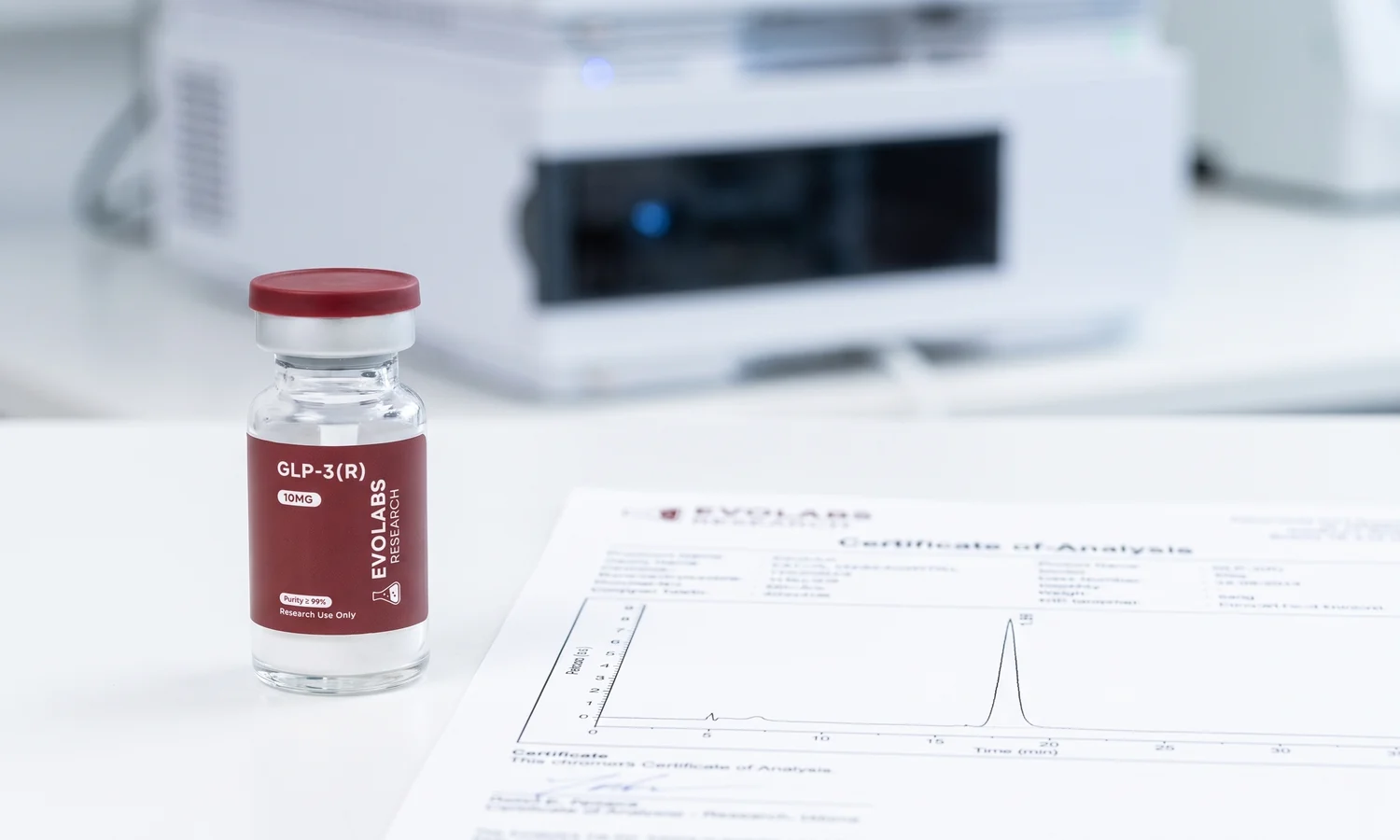
All EVO Labs Research compounds are manufactured to research-grade standards and independently tested by Janoshik Analytical (Prague, est. 2013). The Certificate of Analysis for this compound includes full HPLC chromatography data, mass spectrometry confirmation, net purity percentage, and net content verification.
Research Use Only
This product is strictly for in vitro research and laboratory use only. Not for human or veterinary consumption. By purchasing, you confirm use in a controlled research setting.