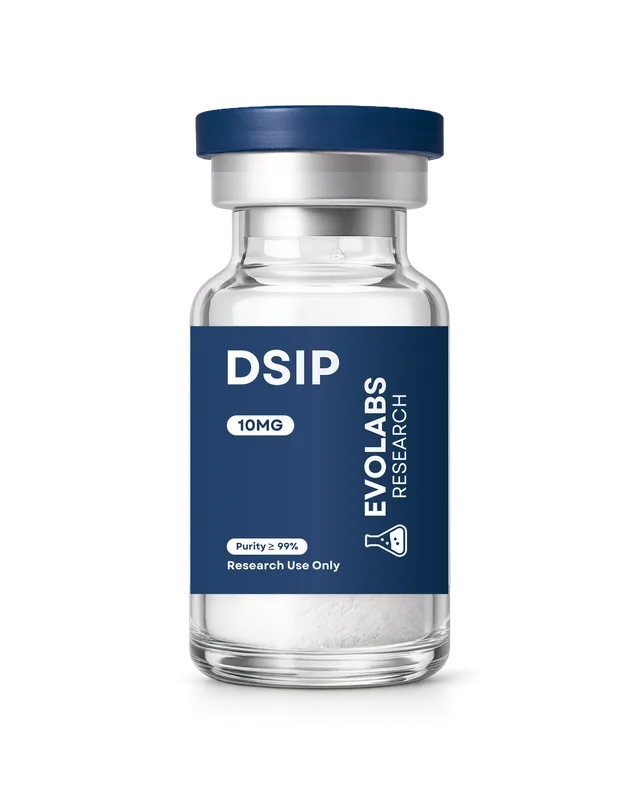
DSIP
Delta Sleep-Inducing Peptide — a neuropeptide studied for sleep regulation, stress response, and neuroprotective effects. DSIP modulates delta-wave sleep in research models.
Compound Profile
Pharmaceutical Data Sheet
Mechanism of Action
How DSIP Works
DSIP is an amphiphilic nonapeptide first isolated in 1974 from the cerebral venous blood of rabbits. It modulates sleep architecture through delta-wave induction, acts as a stress-limiting factor by reducing basal corticotropin (ACTH) levels, and influences opioid receptor activity for pain modulation — with additional effects on LH release and mitochondrial oxidative phosphorylation.
- Decreases basal ACTH release and blocks stress-induced secretion
- Modulates cortisol rhythmicity and stress tolerance
- Increases substance P concentration in hypothalamus
- Promotes delta-wave EEG patterns during NREM sleep
- Increases sleep efficiency and reduces sleep latency
- Modulates circadian rhythmicity of sleep-wake cycling
- Influences opioid receptor activity for pain modulation
- Alleviates opiate and alcohol withdrawal symptoms
- Normalizes blood pressure and myocardial contraction
DSIP decreases basal corticotropin (ACTH) levels and blocks its stress-induced release, attenuating the cortisol stress response. Simultaneously, it promotes delta-wave EEG activity characteristic of restorative slow-wave sleep. It also stimulates release of luteinizing hormone (LH) and increases substance P concentration in the hypothalamus.
Pollard BJ & Pomfrett CJ, Eur J Anaesthesiol (2001): DSIP editorial — safety and biological activities.
Preclinical Findings
Research Models
Clinical Data
Double-Blind Study: Improved Sleep Efficiency in Chronic Insomniacs
A double-blind study in chronic insomniacs showed higher sleep efficiency and shorter sleep latency with DSIP vs. placebo. Acute administration produced a 59% increase in total sleep time within 130 minutes. In a separate withdrawal cohort (~100 inpatients), 97% of opiate-dependent and 87% of alcohol-dependent patients had symptoms alleviated by IV DSIP.
Schneider-Helmert D, Eur J Clin Pharmacol (1984); Dick P et al., Neuropsychobiology (1984).
Double-blind placebo-controlled trial; withdrawal cohort n~100 inpatients
Research Outcomes
Key Research Success Metrics
Safety Profile
Research Safety Notes
- Described as "incredibly safe" — no lethal dose (LD50) established in any animal model (Pollard & Pomfrett, Eur J Anaesthesiol, 2001)
- No significant adverse events apart from transient headache, nausea, and vertigo
- Well tolerated across IV and subcutaneous routes in human studies
- Short endogenous half-life (~15 min) due to aminopeptidase degradation limits accumulation
- Long-term safety data has not been established in large-scale controlled trials
DSIP clinical evidence remains mixed and contradictory across studies. While acute effects are documented, short-term treatment of chronic insomnia showed limited therapeutic benefit. For research use only.
About DSIP
Delta Sleep-Inducing Peptide — a neuropeptide studied for sleep regulation, stress response, and neuroprotective effects. DSIP modulates delta-wave sleep in research models.
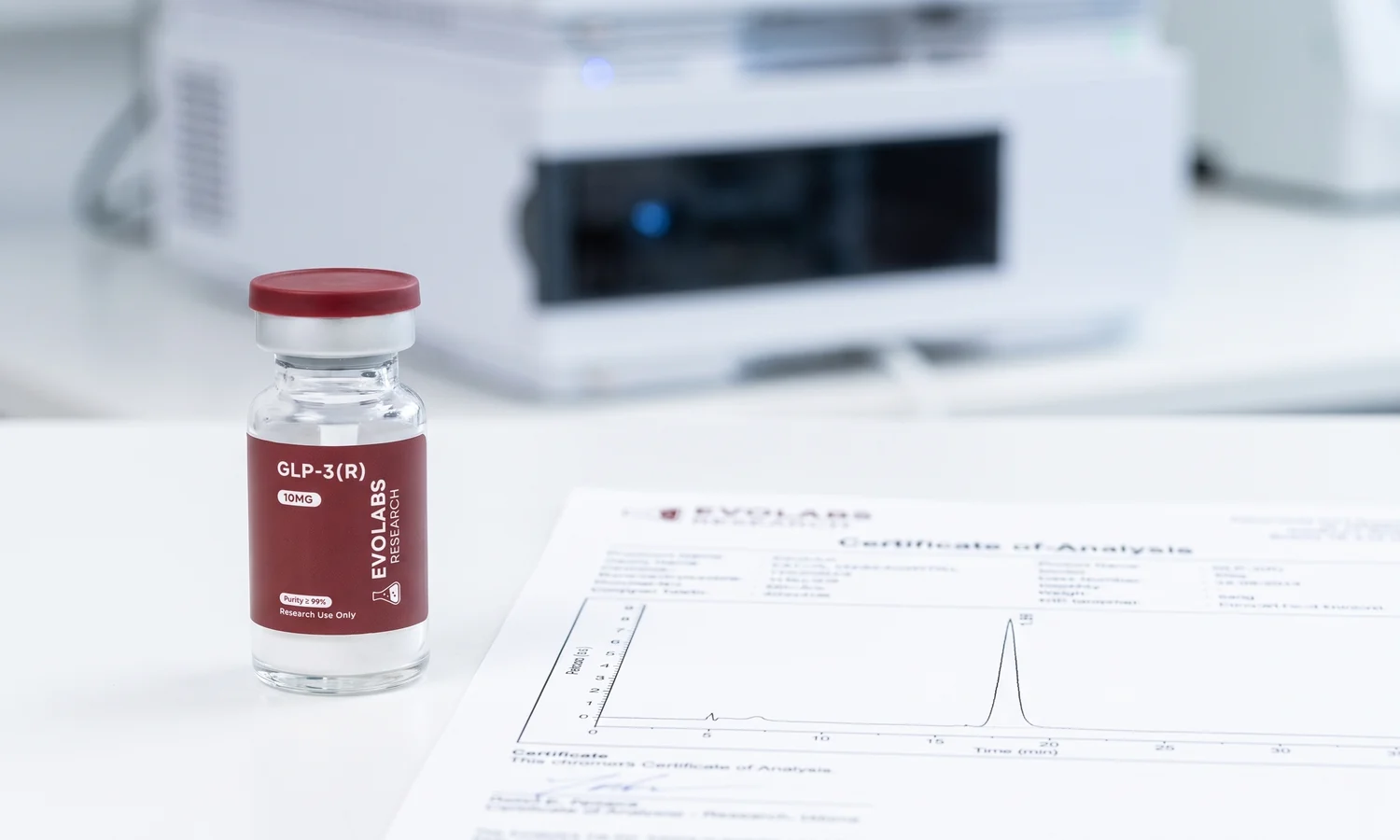
All EVO Labs Research compounds are manufactured to research-grade standards and independently tested by Janoshik Analytical (Prague, est. 2013). The Certificate of Analysis for this compound includes full HPLC chromatography data, mass spectrometry confirmation, net purity percentage, and net content verification.
Research Use Only
This product is strictly for in vitro research and laboratory use only. Not for human or veterinary consumption. By purchasing, you confirm use in a controlled research setting.